
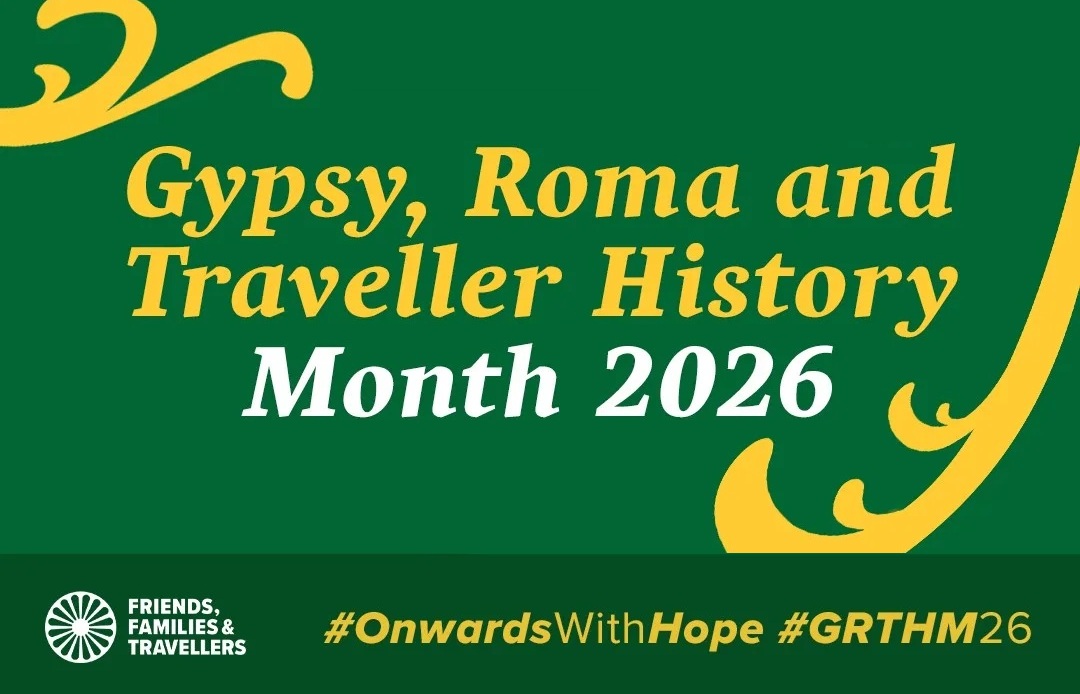
Gypsy, Roma and Traveller History Month calls us to remember not only where we have come from but also where we still need to go.
This year’s theme, “Onwards in Hope,” resonates deeply with Gypsy, Roma and Traveller communities in Wales, communities that have endured generations of exclusion, erasure and hostility yet continue to produce knowledge, culture, scholarship and resistance.
Within universities, hope cannot be symbolic. It must be structural. It requires institutions to confront how Gypsy, Roma and Traveller people have been rendered invisible within race equality, widening participation agendas, and to actively transform this.
At Swansea University, the Race Equality Charter (REC) provides a critical framework for moving beyond broad commitments towards measurable, accountable change. This includes recognising Romany Gypsies and Irish Travellers as legally protected ethnic groups under the Equality Act 2010 and ensuring that REC work meaningfully addresses the structural barriers experienced by Gypsy, Roma and Traveller staff and students.
REC principles call for action across several key areas: improving representation and progression, strengthening inclusive cultures, enhancing the quality and visibility of data, and creating trusted mechanisms for reporting and addressing racism.
Gypsy, Roma and Traveller people remain among the most marginalised ethnic groups in Britain across education, health, housing and employment. Despite our experiences becoming less absent from institutional data, equality monitoring and policy frameworks, Gypsy, Roma and Traveller students and staff continue to navigate higher education without visibility or support.
Embedding Gypsy, Roma, and Traveller inclusion within REC, therefore, requires more than recognition.
It requires action:
- Continuing to improve data collection and interpretation to capture the diversity of Gypsy, Roma and Traveller identities in ways that are safe, meaningful and informed by community expertise
- Addressing inequities in access, progression and attainment, particularly where histories of educational exclusion continue to shape outcomes
- Creating culturally safe environments, where disclosure is supported, and racism is actively challenged
- Embedding Gypsy, Roma and Traveller histories, scholarship and voices across curricula, research and institutional narratives
Crucially, this work also demands that universities explicitly recognise and challenge anti-Gypsyism as a distinct and enduring form of racism. Even within progressive spaces, it remains one of the most normalised and under-recognised forms of racial discrimination in British society. REC-aligned anti-racist practice must therefore include a clear commitment to naming and addressing anti-Gypsyism at structural, cultural and interpersonal levels.
“Onwards in Hope” cannot mean passive optimism in this context. It must mean creating conditions in which Gypsy, Roma and Traveller people are not an afterthought within equality work but are recognised as integral to it.
There is also significance in the increasing visibility of Romani and Traveller leadership within spaces historically closed to our communities.
Allison Hulmes, a Welsh Romany social work academic, was recently appointed as the first Romani representative within the Conference of International NGO’s (CINGO) and will be representing them at the Council of Europe’s Committee of Experts on Roma and Traveller Issues (ADI-ROM). Her work highlights the importance of meaningful inclusion in decision-making structures, principles that closely mirror REC priorities. Allison has been working with the Roma and Traveller Division of the Council of Europe and the Westminster All-Party Parliamentary Group on Gypsy, Roma and Travellers to launch the new Roma and Traveller Inclusion Strategy (2026-2030) in Westminster in early July 2026.
Hope is not abstract; therefore, “Onwards in Hope” reminds us that progress is not inevitable. It is built through courage, accountability, and sustained action. The challenge for universities is whether they are prepared to move beyond performative inclusion and stand alongside Gypsy, Roma and Traveller communities in building institutions where we are not only present, but fully recognised, respected and able to thrive.

Allison Hulmes
Senior lecturer/researcher in social work.
Guest editor, special editions, Child Abuse Review (Wiley) /Journal of Critical and Radical Social Work (BUP)