

BASW/SWU Advice & Representation (A&R) Officer, Laura Sheridan answers commonly asked questions about the fitness to practice process.
What to expect and how to approach them
When your regulator decides that your case needs to proceed to a full fitness to practise hearing, this naturally triggers huge stress and anxiety. For most regulated professionals, this is the first experience they have had of this kind. The process is daunting and complicated.
What happens in the lead up to the hearing?
The regulator will usually issue some case management documents, to establish your availability, whether you plan on calling any witnesses and what your response is to the allegations. You do not have to provide any response to the allegations at this point and can choose to respond once you have received ‘full disclosure’.
Once these documents are filled in, a date will normally be set for the hearing and ‘case management directions’ will be sent to the parties. These will specify when the regulator must disclose their case to you and when you need to respond to this disclosure by.
Can I get advice and representation from BASW?
Only a trade union can guarantee representation in hearings before an employer. Under section 10 of the Employment Relations Act 1999, members of the Social Workers Union (SWU) have the right to be accompanied by a SWU Trade Union Official to certain workplace meetings such as a disciplinary or grievance hearing.
As the British Association of Social Workers (BASW) is not a Trade Union, members of BASW without union membership do not have this right.
SWU works with BASW to guarantee our joint members the legal entitlement of representation in employers’ hearings. Our skilled A&R team understands the issues you face and is able to advise and represent you at regulatory councils. Opting in to SWU membership means you get all the benefits of the trade union alongside BASW, your professional association – all under one roof.
If you are a BASW member, our Advice and Representation service is available for any issues that arise a month after you joined. We ask members to get in touch as soon as they know they have been referred to their regulator – the sooner we are aware of it, the better the advice and representation we can offer.
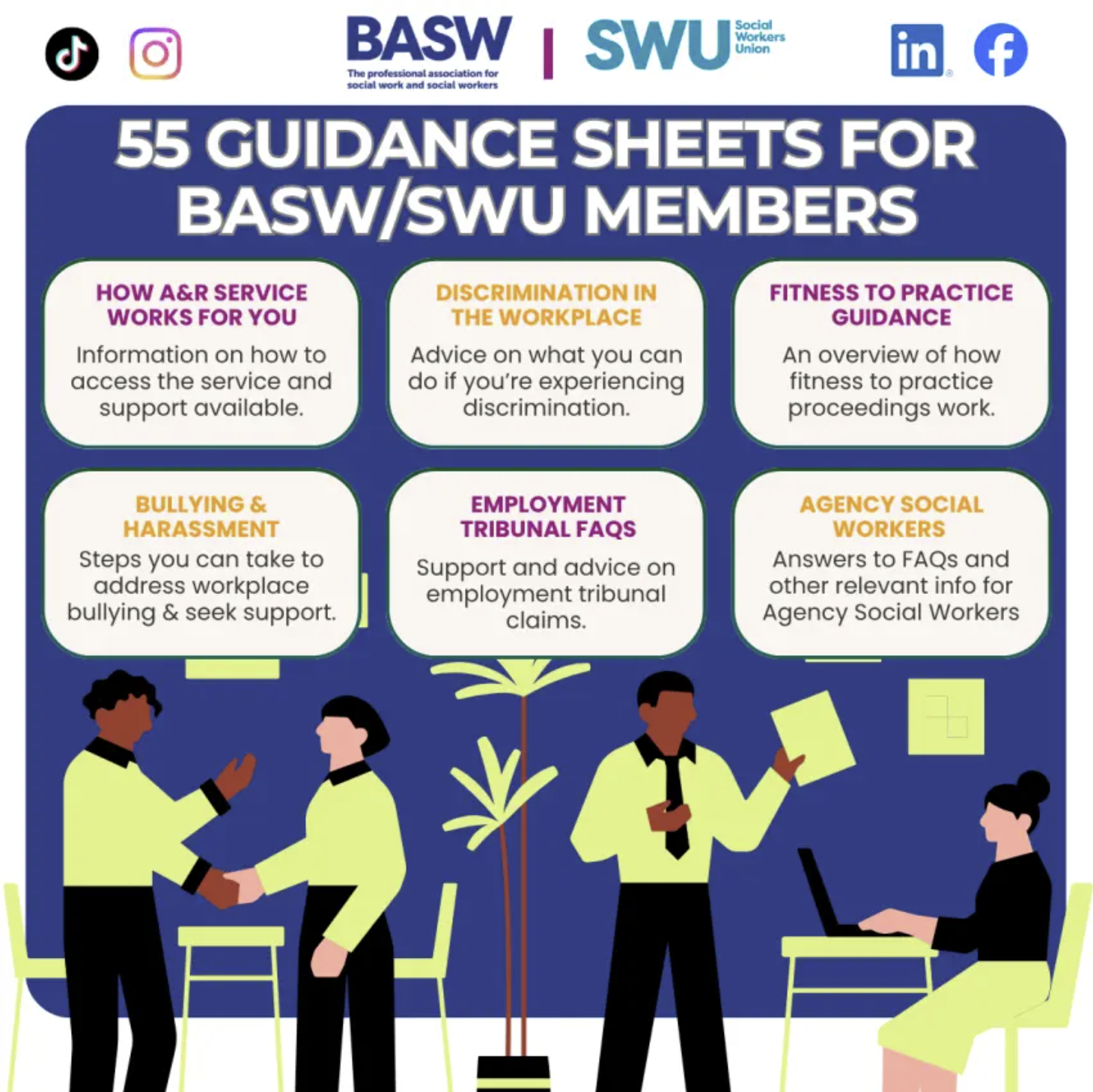
Members who have just joined are not eligible for representation but can access a range of guide sheets written by our team to assist with providing a response to the regulator and how to approach a hearing.
They also include advice for managing common workplace issues that might crop up.
What is ‘disclosure’ and what do I need to do in response?
Disclosure is when the regulator provides you with all the evidence that they plan to use in your case. This will usually include a statement of case, statements from witnesses that the regulator intends to call and a bundle of supporting documentary evidence that they plan to refer to during the hearing.
You need to read all disclosure documents thoroughly and ensure that you are fully aware of the evidence against you. You should provide a response to the allegations and send the regulator any evidence that you plan on using to support your case. You should also provide statements from any witnesses that you plan on calling to give evidence at the hearing.
What should I include in my response statement?
This is very dependent on whether you are admitting or denying the allegations. It is highly recommended that you get advice on your response statement, as the contents of this statement can strongly affect the outcome of your case.
What happens at the hearing?
A panel will hear your case. Some regulators have a legally qualified member of the panel; others use a separate legal adviser who advises the panel on the law and procedure.
The regulator will present their case first and will call their witnesses. You can ask questions of the witnesses. Following this, it is your turn to present your case. The regulator and the panel will ask you questions relating to the allegations and your response statement. Both parties will be given the opportunity to summarise their case to the panel in the form of a ‘closing statement’.
When both parties have given their evidence, the panel will retire to reach a decision on whether the allegations have been proven. If the allegations are not proven, the hearing will end at this point. If they are found proven, there are further states for the panel to consider. They will first consider ‘misconduct and impairment’. This means they will be considering whether your failings amounted to ‘misconduct’ (a serious professional error) and whether your fitness to practise is currently impaired. If they consider that you have remediated, they may not find impairment. If impairment is found, the panel will then go on to consider what sanction they issue.
What sanction might I get?
This is very dependent on the seriousness of the allegations and the level of insight and remediation the panel find that you have demonstrated. The panel can decide to take no further action, issue a warning, put conditions on you being able to practice your profession or suspend you from the register for a period. They can also remove you from the register.
Do I have to attend the hearing?
We strongly advise that you do! Attending a hearing is stressful, particularly when you are giving evidence. But if you don’t attend, the panel has the right to view this negatively and it will affect the outcome in your case. The hearing is your opportunity to present your case – if you don’t attend, you won’t get to do this and the panel will make a determination on the evidence before them alone.
Why Join BASW?
Joining your professional association not only provides you with employment protection and peace of mind that you’ll be supported if you are under investigation, but it also opens doors to an array of additional resources, coaching, mentoring, training and networks that will help you to advance your career.
- Protection: £5 million professional indemnity insurance cover tailored to your social work role and experience level.
- Advice and Representation: Access BASW/SWU Advice and Representation, a team of qualified social workers for professional/regulatory help.
- Professional Support Service: Confidential 1-1 support and coaching service for social workers and students.
- Training and CPD: Develop your knowledge and skills and carve out your career path with free and discounted CPD.
Click here to discover how BASW membership can support you.
Why Join SWU?
SWU works with BASW to protect social work professionals – speaking as social workers, for social workers. Having a professional association and trade union together is important for the social work profession. We aim to be the best trade union for social workers.
SWU Trade Union Officials in the Advice & Representation service work throughout the UK and provide representation at internal hearings for disciplinary and grievance procedures, and employer investigations into practice and misconduct allegations. Our team provides professional, swift, practical representation.
SWU also offers members:
- Free access to the majority of the GFTU Education Programme training courses and discounts on professional development courses.
- Funding and support for activism through the SWU Campaign Fund.
- Union Contact training and support to promote membership and activism in workplaces, universities, and beyond.
- Eligibility to apply to sit on the SWU Executive Committee which plays a key part in setting the union’s direction and overseeing its aims and mission.
- The invitation to contribute to the monthly SWU Newsletter on topics relevant to social work, trade unionism, and activism.
- Member offers including a free financial health check and 10% discount on legal fees.
BASW members can opt into SWU membership at a discounted rate. Click here for more information.