
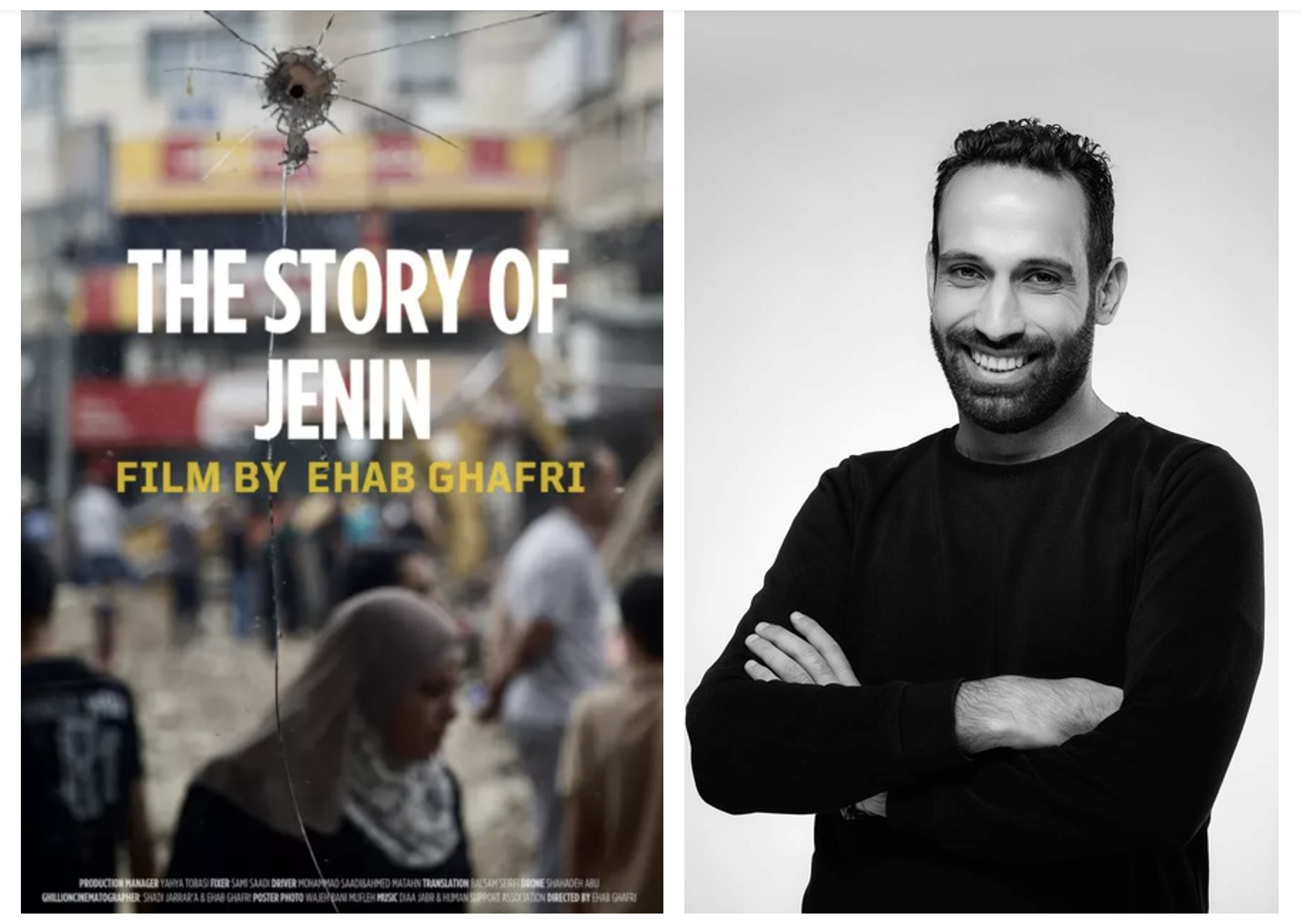
SWU will be screening the new version of The Story of Jenin on Wednesday 10th June 2026 starting at 7pm, and attendees are invited to ask questions and engage with the director afterward.
The Story of Jenin is a 70-minute documentary by Palestinian filmmaker, psychologist, and stage director Ehab Ghafri. The first 2024 version of this film tells the story of life inside the Jenin refugee camp – located in the West Bank in Palestine under Israeli occupation – from 2013 until present day. In 2025, the occupying army completely besieged the camp and turned its residents into refugees. The new 2026 version of this film includes Ehab’s return to document what Jenin’s remaining inhabitants have to say about this forced exile, their hopes, and their resistance to the occupation.
This online screening will help raise money for the WAVES mobile cinema school for children and teenagers across underserved communities in the northern West Bank, and is in support of the union’s motion of solidarity with Palestine.
“This is not the cinema of red carpets, but real cinema that must reach the audience directly from the filmmaker.”
Members and non-members alike are invited to attend this online event, so please share this information far and wide.
In lieu of charging a booking fee for this event, we are instead asking attendees to please donate to support the WAVES mobile cinema school: https://whydonate.com/fundraising/support-the-mobile-cinema-school
Book your place here: https://docs.google.com/forms/d/e/1FAIpQLSc2K6BSvMYReBLKSY9kfbBSJO52F5VMuxiDOEDKCt_HGfz1Vw/viewform?usp=header
Learn more about The Story of Jenin: a Documentary and the WAVES Mobile Cinema School
In 2019, a Palestine-UK Social Work Network (PAL-UK) / SWU delegation of social workers visited Palestine, where they met Ehab Ghafri in the historic city of Nablus. Commanding attention with his engaging smile, enormous intelligence, compassion, generosity, and humour, Ehab is someone who has “lived a thousand lives” — as a filmmaker, psychologist, activist, and theatre artist working across social, political, and environmental fields.
Ehab’s work as a psychologist prioritised vulnerable groups within Palestinian communities, with a particular focus on women and displaced children. As a theatre artist, he drew upon traditions such as the Theatre of the Absurd and the Theatre of the Oppressed to explore psychological trauma and provoke questions in search of solutions. Over time, Ehab moved into cinema, committed to making films entirely free from producer control, driven by the conviction that films are made for people, not for awards. His guiding belief — that “those who aren’t killed by war will be killed by memory” — underpins everything he creates.
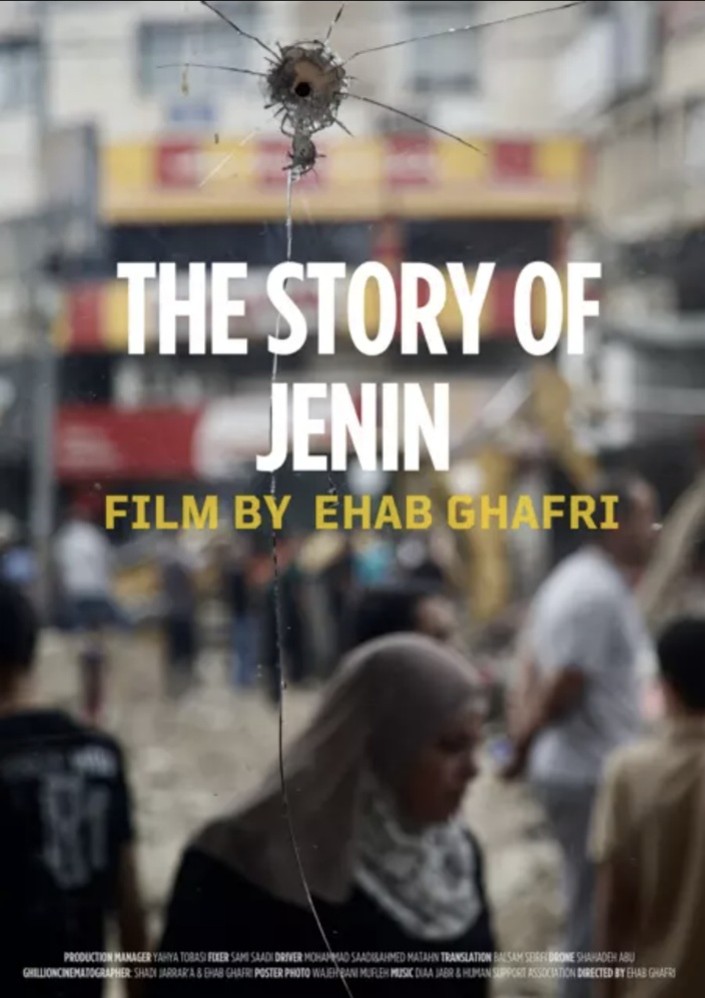
The Story of Jenin is Ehab’s personal, intimate exposition of the harsh realities, daily struggles, and resilience of the residents of Jenin Refugee Camp. Tracing the camp’s history from 2013 to today, it examines the lives of a tight-knit community of 16,000 people surviving in just one square kilometre under the weight of military violence, displacement, and economic hardship. Filming was life-threatening, with Israeli snipers targeting cameras, and the camp itself was destroyed for a third time, displacing residents within their homeland.
This documentary captures their voices and human experiences, as civilians, resistance fighters, mothers and children of martyrs, paramedics, and journalists. It seeks to deepen awareness and raise questions, whilst centring the audience as partners and witnesses to the film’s creation, narrative, and ending. It encourages viewers to ask, perhaps for the first time, whether the people on film are merely numbers, or a collection of emotions, hardships, laughter, and hopes.
Ehab’s vision of cinema is one of revolution — rejecting the capitalist model that concentrates storytelling power among the wealthy and returning it to those whose lives are being told. Consequently, he champions young Palestinian filmmakers, platforming emerging directors whose work would otherwise go undistributed.
His broader mission extends to the WAVES Mobile Cinema School, a van-based project bringing film education and screenings to rural and marginalised communities across the West Bank, targeting women, youth, and people with disabilities.